Antar mouna is a guided meditation that take you through a systematic process of withdrawing the senses, focusing the mind and taking control of thoughts. Wonderful for stilling a distracted mind and gaining clarity and insight.
Read more about Antar Mouna here.
Saturday, 27 November 2010


Tuesday, 23 November 2010
Why do we get headaches?
Headaches are often caused by muscle tension. Tension in the  sternocleomastiod and scalenes in the neck as well as the upper trapezius will restrict the arteries that supply blood to the brain. Headaches are nature's warning that our brains are not getting enough blood supply and oxygen. That's why we often get headaches when we are stressed - emotional or psychological stress causes us to tense up our bodies, usually the shoulders and neck/jaw. Hence the headache.
So what can you do about it? Deal with anger
Emotional stress can lead to headaches, so what emotions are the culprits? A study done at Saint Louis University found that anger, particularly bottled-up anger, was more of a cause of headaches than either anxiety or depression (the latter two being very commonly linked to headaches).
If anger is your problem here's what to do:
Sinus pressure, associated with a cold or allergies, are another common cause of headaches. These can often lead to migraines. The best practice for this is neti. Neti is a yogic shatkrya (or cleansing practice) and if done correctly, using the right type of pot, can be a wonderful practice that refreshes and clears the head.
 sternocleomastiod and scalenes in the neck as well as the upper trapezius will restrict the arteries that supply blood to the brain. Headaches are nature's warning that our brains are not getting enough blood supply and oxygen. That's why we often get headaches when we are stressed - emotional or psychological stress causes us to tense up our bodies, usually the shoulders and neck/jaw. Hence the headache.
So what can you do about it? Deal with anger
Emotional stress can lead to headaches, so what emotions are the culprits? A study done at Saint Louis University found that anger, particularly bottled-up anger, was more of a cause of headaches than either anxiety or depression (the latter two being very commonly linked to headaches).
If anger is your problem here's what to do:
- relax your jaw and your neck muscles, sit tall and take deep breaths - this will help to dissipate your anger
- practice a little self-study (svadhyaha) to found out what is making you angry
- practice letting go of things that you can't control
- practice forgiveness - forgiveness will not change the past but neither will anger. Learning to let go of resentment will change you .. for the better.
Yoga to help headaches
Any kind of yoga can be helpful because it heightens awareness of the breath whilst simultaneously exercising and relaxing the key muscles involved in causing tension. The practice should be well-rounded - and include standing, lying, and seated postures as well as inversions, backbends and balances. As well as active energising postures, a good sequence should include restorative postures such as yin yoga. Yin yoga postures are stretches that are held for up to 5 mins, and work on the deep fascial connective tissues and the energy meridians.
Try these yin yoga postures with deep breathing:
Other considerationsSinus pressure, associated with a cold or allergies, are another common cause of headaches. These can often lead to migraines. The best practice for this is neti. Neti is a yogic shatkrya (or cleansing practice) and if done correctly, using the right type of pot, can be a wonderful practice that refreshes and clears the head.
Friday, 19 November 2010
Be still clear mind

Did you know that the brain is only about 2% of the mass of your body yet it accounts for more than 20% of your daily energy requirement? Our brains spend most of the time distracted. It is busy distracting thoughts that take up this energy. The ability to get and stay focused is in short supply in this information intensive age that we live in. Perhaps that is why yoga, with its ultimate aim of stilling the mind, is more popular now than ever.
From the first chapter and verse of the Yoga Sutras, Patanjalis tome from 2,500 years ago, yoga is "Citta vrtta yoga nirodhaha". Yoga is the cessation of the fluctations of the mind. Yoga is the settling of the mind into stillness, so that the stirrings of consciousness (citta) become settled and we are able to abide in our true self.
This is a process of illumination, rather like the beacon of a lighthouse with its highly focused and constant beam, which illuminates and shows the path in the midst of darkness, so the process of yoga allows purusa (the true self, undisturbed mind) to shine through the fog of our clouded consciousness, which we mistakenly take for our true self.
We live deluded. And this causes our suffering. We don't see things as they really are (avidya) and our consciousness is clouded by our attachment to things that don't matter. When the mind becomes still and clear, even if this way of being is something that we only catch microsecond glimpses of, we connect with a vast and deep connection within ourselves that is also connected to every other being. Yet the mind is easily disturbed. Like a glass of freshly poured orange juice, all the bits settle to the bottom if the glass is left, but once moved the liquid becomes cloudy once more.
So we need to allow our minds to settle. And we need to make more effort in turbulent times, where the mind can so easily become distracted and cloudy again. Yoga achieves this. The postures are meditation in themselves, but after practice of yoga we find it so much easier to settle into 20 mins of meditation. Yoga yokes the body and the mind and prepares us for the practice of meditation.
Try it! Even 10 mins a day will give you more energy, focus and wellbeing!
Sunday, 10 October 2010
We'll see ...
 This is one of my favourite zen/taoist stories about how our thinking creates our problems:
There is a Taoist story of an old farmer who had worked his crops for many years. One day his horse ran away. Upon hearing the news, his neighbours came to visit.
"Such bad luck," they said sympathetically.
"We'll see," the farmer replied.
The next morning the horse returned, bringing with it three other wild horses.
"How wonderful," the neighbors exclaimed.
"We'll see," replied the old man.
The following day, his son tried to ride one of the untamed horses, was thrown, and broke his leg. The neighbors again came to offer their sympathy on his misfortune.
"We'll see," answered the farmer.
The day after, military officials came to the village to draft young men into the army. Seeing that the son's leg was broken, they passed him by. The neighbors congratulated the farmer on how well things had turned out.
"We'll see" said the farmer.
In saying 'we'll see' the farmer was demonstrating one of the core principles of yogic thinking: vairagya. Vairagya means non-reaction; if we are able to function from a state of vairagya we have a refined discriminating awareness that doesn't get 'caught up' in reacting and judging.
As Rudyard Kipling wrote in his famous poem, If:
If you can meet with Triumph and Disaster
And treat those two impostors just the same;
This is both a Buddhist and a yogic concept - of course, both have similar roots.
Yoga for Anxiety
Watch this 15 min video to practice yoga to help relieve and manage the symptoms of anxiety:
Breathing and Anxiety
 Recently I have been working alot with clients who have a high degree of anxiety. Their symptoms range from panic, over worrying, phobias, chest pains, blurred vision, impaired ability to think clearly, headaches, inability to focus, loss of memory, muscle pain, dizziness and sleep problems.
The funny thing is that these symptoms are also the result of hyperventilation (over breathing) and other breathing disorders. When we hyperventilate, we are breathing mainly through the chest.
Test yourself:
- sit in a comfortable position on the chair or on the floor
- place your right hand on the centre of your chest, the heart area, in between the nipples
- place your left hand on your belly, just below your navel
- begin to breathe in your own way, your normal breath
Do you feel the movement more beneath your left or right hand? If the right hand is moving more you are chest breathing.
Chest breathing results in a shallow breath. As the breath is shallow too much carbon dioxide is exhaled and body becomes more alkaline, this (alkylosis) triggers the neuro-hormonal, physiological responase which increases breathing rate and also the anxiety itself.
An initial activating event (a conflict with your boss, perhaps) may have caused the breathing response (and the initial anxiety) but the breathing then propagates the anxiety. Thus we have entered a vicious circle of anxiety.
How we breathe, and how we feel are intimately connected in a two-way loop. Which means that we can change the way we feel by chaning our breathing.
However, before I move on to that it is also important to know that chest breathing can cause tension and pain because it uses the wrong muscles, such as the sternocleidomastoid and upper trapezius in the neck, pectoralis and latisimus dorsi in the trunk. These muscles soon get tired and weak, because they are not designed for primary breathing, and this can lead to aches and pains in the neck, shoulders and upper back.

The diaphragm is the main breathing muscle and produces 80% of the inhalation. The diaphragm is attached to the ribcage and the lumbar spine. When we breathe using the diaphragm, the belly moves; it moves out on the inhale and releases back as we breathe out.
Diaphragmatic breathing has many benefits over chest breathing:
- it massages the internal organs and reduces the symptoms of IBS and other digestive problems (common with anxiety)
- it activates the vagus nerve and stimulates the parasympathetic nervous system and reduces the release of the stress hormone cortisol, so that we feel less anxious and more relaxed
- as the diaphragm is connected to the heart, it acts as a second heart and means that less stress is put on the heart when we use the proper breathing muscle to breathe
Learn how to practice diaphragmatic breathing with this short podcast.
Sunday, 3 October 2010
Beautiful Women
Age 3: She looks at herself and sees a Queen.
Age 8: She looks at herself and sees Cinderella.
Age 15: She looks at herself and sees an Ugly Sister (Mum I can't go to school looking like this!)
Age 20: She looks at herself and sees 'too fat/too thin, too short/too tall, too straight/too curly'- but decides she's going out anyway.
Age 30: She looks at herself and sees 'too fat/too thin, too short/too tall, too straight/too curly' -- but decides she doesn't have time to fix it, so she's going out anyway.
Age 40: She looks at herself and sees 'too fat/too thin, too short/too tall, too straight/too curly' -- but says, "At least I am clean' and goes out anyway.
Age 50: She looks at herself and sees 'I am' and goes wherever she wants to go.
Age 60: She looks at herself and reminds herself of all the people who can't even see themselves in the mirror anymore. Goes out and conquers the world.
Age 70: She looks at herself and sees wisdom, laughter and ability, goes out and enjoys life.
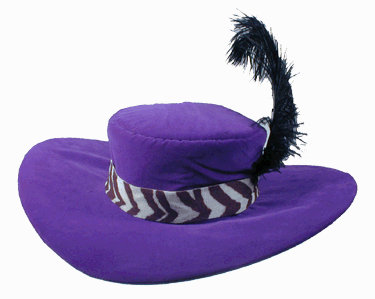
Age 80: Doesn't bother to look. Just puts on a purple hat and goes out to have fun with the world.
Maybe we should all grab that purple hat earlier!!
Age 8: She looks at herself and sees Cinderella.
Age 15: She looks at herself and sees an Ugly Sister (Mum I can't go to school looking like this!)
Age 20: She looks at herself and sees 'too fat/too thin, too short/too tall, too straight/too curly'- but decides she's going out anyway.
Age 30: She looks at herself and sees 'too fat/too thin, too short/too tall, too straight/too curly' -- but decides she doesn't have time to fix it, so she's going out anyway.
Age 40: She looks at herself and sees 'too fat/too thin, too short/too tall, too straight/too curly' -- but says, "At least I am clean' and goes out anyway.
Age 50: She looks at herself and sees 'I am' and goes wherever she wants to go.
Age 60: She looks at herself and reminds herself of all the people who can't even see themselves in the mirror anymore. Goes out and conquers the world.
Age 70: She looks at herself and sees wisdom, laughter and ability, goes out and enjoys life.
Age 80: Doesn't bother to look. Just puts on a purple hat and goes out to have fun with the world.
Maybe we should all grab that purple hat earlier!!
Subscribe to:
Posts (Atom)